
Description
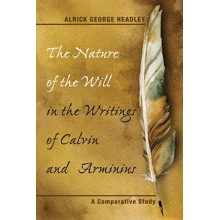
When the general question, “does man have a free will?” is directed to John Calvin and James Arminius, the received and oft-repeated answer is that Calvin, jealous for the glory of God, opposes free will and that Arminius, being human-centered, advocates for free will, thus robbing God of his glory. This book shows, through a fresh look at the original sources, that the above characterization of the differences between Calvin and Arminius on the nature of the human will is misguided. For, by using the fourfold state of human beings as the lens through which to ask and answer the question, it is shown here that the glory of God constitutes the main reason underlying both Calvin’s opposition to, and Arminius’s advocacy of, free will. Moreover, though for different reasons and with many nuances, Calvin and Arminius do agree seventy-five percent of the time—in the created, the redeemed, and the glorified state—that human beings possess free will. However, they differ significantly on the location, efficacy, and function of that free will. For Calvin, free will is a gift of grace; for Arminius, it is a gift of grace and nature.




Reviews
There are no reviews yet.